
















 Nicole

Why the new TikTok-US deal now affects every brand strategy
 TikTok is on the verge of a historic deal in the US: US majority control of the app is a done deal. What sounds like geopolitical drama has direct consequences for brands in Germany. From stricter content rules to new brand safety requirements: anyone planning creator campaigns today needs to understand the tectonic shifts on the platform. This article shows the risks and opportunities that are now emerging - and how brands can future-proof their influencer strategy.
TikTok remains indispensable and at the same time more unpredictable
With over 20 million active users in Germany alone, TikTok has long since become one of the most important platforms for brand communication. Gen Z in particular spends more than 90 minutes a day there, and hardly any other app has a greater influence on consumer trends, music or lifestyle. For marketers, TikTok is therefore not a nice-to-have, but a central channel for reach, community building and social commerce. It is therefore no wonder that there are over 300 million TikTok Creators in our database.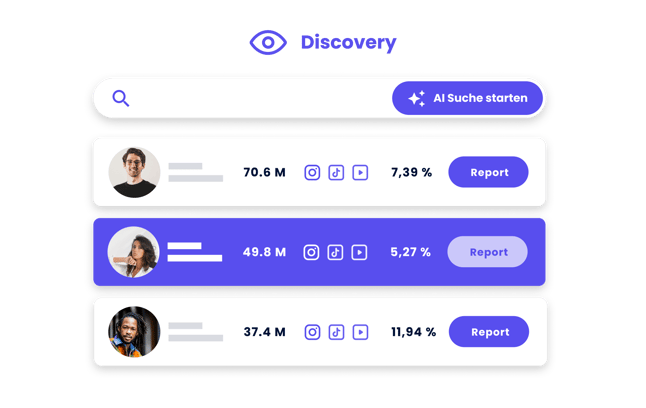
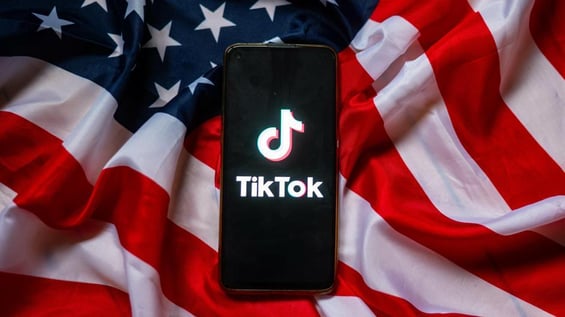
This makes the latest bombshell from Washington all the more relevant: the US government and Bytedance have reached an agreement that places TikTok under US control in the United States. What sounds geopolitical sends a clear signal to Europe: requirements for data, content and brand safety may need to be reconsidered. For brands in DACH, this means that anyone planning creator campaigns today must adapt their strategies - from creator searches to new briefing standards.
1 Governance shifts: Why US policy affects German campaigns
The European Commission has opened a formal investigation into TikTok under the Digital Services Act (DSA), signalling stricter scrutiny of very large online platforms. Although the DSA applies to the EU market, its enforcement has global implications, influencing how platforms approach data governance, advertising transparency and algorithmic responsibility.
For marketers, this means that the platform environment in which creators are active will be more strictly regulated. Content can be deleted more quickly and reach will shift abruptly. Creators are already reporting that even minor infringements, such as incorrectly labeled ads, are leading to a reduction in their reach. This is presumably how TikTok wants to avoid sanctions and thus establish even stricter moderation for content.
Recommendation for action:
Brands should therefore no longer rely on a TikTok monoculture, but should consistently align their strategies to be multichannel. Campaigns must be planned in such a way that creators can flexibly switch to Instagram reels or YouTube shorts. At the same time, it is worth using data-driven tools such as IROIN® by Stellar Tech to identify creator risks, such as policy violations or content blocks, at an early stage and secure them with backups. Those who focus on diversity and data now will gain the necessary resilience in an environment that is changing faster than many would like.
2 Focus on creator ethics: acting morally, staying brand safe
TikTok is currently tightening its Community Guidelines (September 2025): Artificially generated content must be labeled and commercial posts must be clearly declared. This poses a double challenge for brands. On the one hand, there is an increased responsibility to only cooperate with transparent and compliant creators. On the other hand, ethical issues are moving more into focus - from political neutrality to the responsible treatment of young people. The advertising labeling requirement(more on the advertising labeling requirement here) is not really news for most brands, as they already have to comply with it by law.
Current figures show that this is by no means just about "soft factors". According to a study by Marketing Dive, 71% of marketing managers have firmly integrated brand safety practices into their strategies in order to combat disinformation and secure consumer trust. Those who act negligently here risk not only short-term shitstorms, but also a profound loss of trust, which has a direct impact on reach, brand perception and ROI.
Recommendation for action:
Brands should systematically check creators - not only for reach, but also for their brand environment and target group structure. Detailed insights can be gained as early as the research phase thanks to our Discovery Reports, for example : What topics does a creator cover? Which communities are they active in? What values does he convey? Such data-driven analyses - using tools such as IROIN® - are indispensable today in order to make brand safety and value influence measurable from the outset and to consistently rule out ethical risks.
3. performance monitoring: the foundation of every TikTok campaign
With the planned US majority control of TikTok and the parallel DSA procedures in Europe, there is increasing uncertainty as to how reach, algorithms and advertising rules will change in the coming months.
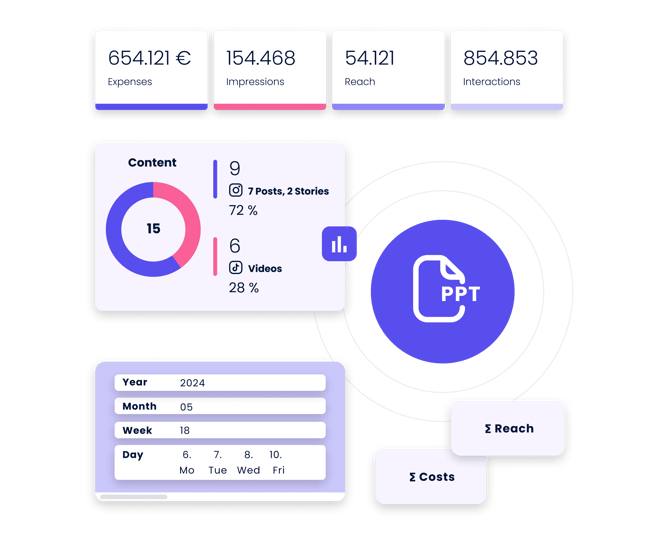
Tracking and monitoring will therefore become the foundation of any TikTok strategy. Only those who continuously evaluate reach, engagement and conversions can recognize at an early stage whether regulatory interventions or algorithmic adjustments will change performance. This allows brands to flexibly shift budgets between TikTok, Instagram Reels or YouTube Shorts and quickly adapt content formats. Historical data is particularly valuable here: it helps to replace gut feelings with facts and check whether weaker results are actually due to platform changes or other factors.
Recommendation for action:
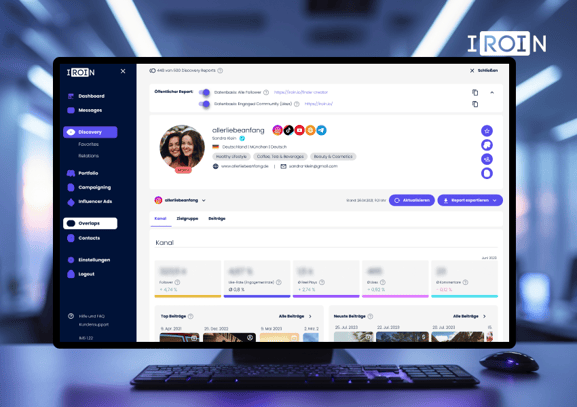
Brands should keep a consistent, data-driven eye on their campaigns - especially now in the case of TikTok. With tools such as IROIN® by Stellar Tech, not only can creators be checked according to brand safety criteria, but detailed real-time reports can also be generated. In just a few clicks, these clearly show how a campaign has developed in terms of reach, impressions, engagement and CPM. This allows marketers to make informed decisions, reallocate budgets in good time and dynamically adapt their strategies to the new framework conditions.
Data-driven creator vetting counts now
The TikTok deal in the USA is more than just a political headline. It marks the beginning of a new era in which platforms will be regulated more strictly or differently, creators will be scrutinized much more closely and brands will be held more accountable. For campaigns worldwide, this means that if you want to continue to be successful on TikTok, you not only have to be creative, but also strategic and compliant.
The three key lessons:
- While TikTok remains a growth engine, brands must not rely on one platform alone.
- Creator ethics is no longer a soft factor, it is a hard-hitting business criterion.
- Today, brand safety is the basis for trust and therefore for ROI.
Brands that consistently invest in data-based strategies now are not only protecting themselves against risks, they are also positioning themselves as pioneers in a market in which trust is the most important currency.