













Skip to the main content.

7 min read

If your brand doesn't rank on TikTok, you're invisible

If your brand doesn't rank on TikTok, you're invisible
13:24


TikTok as a Search Engine

Social search is turning TikTok into a search engine and that makes “ranking on TikTok” the new baseline question for brand visibility. Brands that choose creators who answer real search intent (instead of just chasing trends) stay discoverable long term. Learn more about how you can strategically integrate influencers into your SEO strategy.

Why visibility no longer starts with Google

Almost half of consumers already use TikTok as a search engine to find products, reviews and information - and that's what's shifting visibility away from traditional search results to creator content.

For over two decades, "discovery" in marketing was relatively clear: a need arises, someone Googles, clicks - end of story. This behavior is currently changing. Users are asking their questions where answers are quicker, more visual and more personal: in TikTok searches, Instagram feeds and YouTube how-tos. And platforms are no longer just places for reach, but for finding answers for purchasing decisions.

For brands, this is inconvenient at first because it thwarts traditional planning logic: campaigns run, results are measured and then the content disappears. It works differently in social search. If you appear in the right searches, you can still be found - even if the campaign is long over. Anyone who doesn't appear there barely exists at the moment of discovery.

Social search: Discovery starts before the question

TikTok itself no longer describes the platform as just an entertainment feed, but as a place where users search specifically. The scale shows why this no longer passes as a "trend": in September 2025, TikTok reported over 200 million monthly active users in Europe.

Even Google has publicly acknowledged the trend: at the Fortune Brainstormtechconference, a Google manager said that around 40% of Gen Z users prefer to use TikTok or Instagram for discovery rather than Google search - especially when it comes to restaurants, lifestyle inspiration or product recommendations.

The larger the platform, the more a new search behavior acts like an infrastructure change: it is not individual creators that shape discovery, but millions of micro-searches per day in thousands of niches. And because TikTok videos, reels and shorts function as an answer format (comparisons, tests, "how to" guides), the feed acts like a search engine that curates itself.
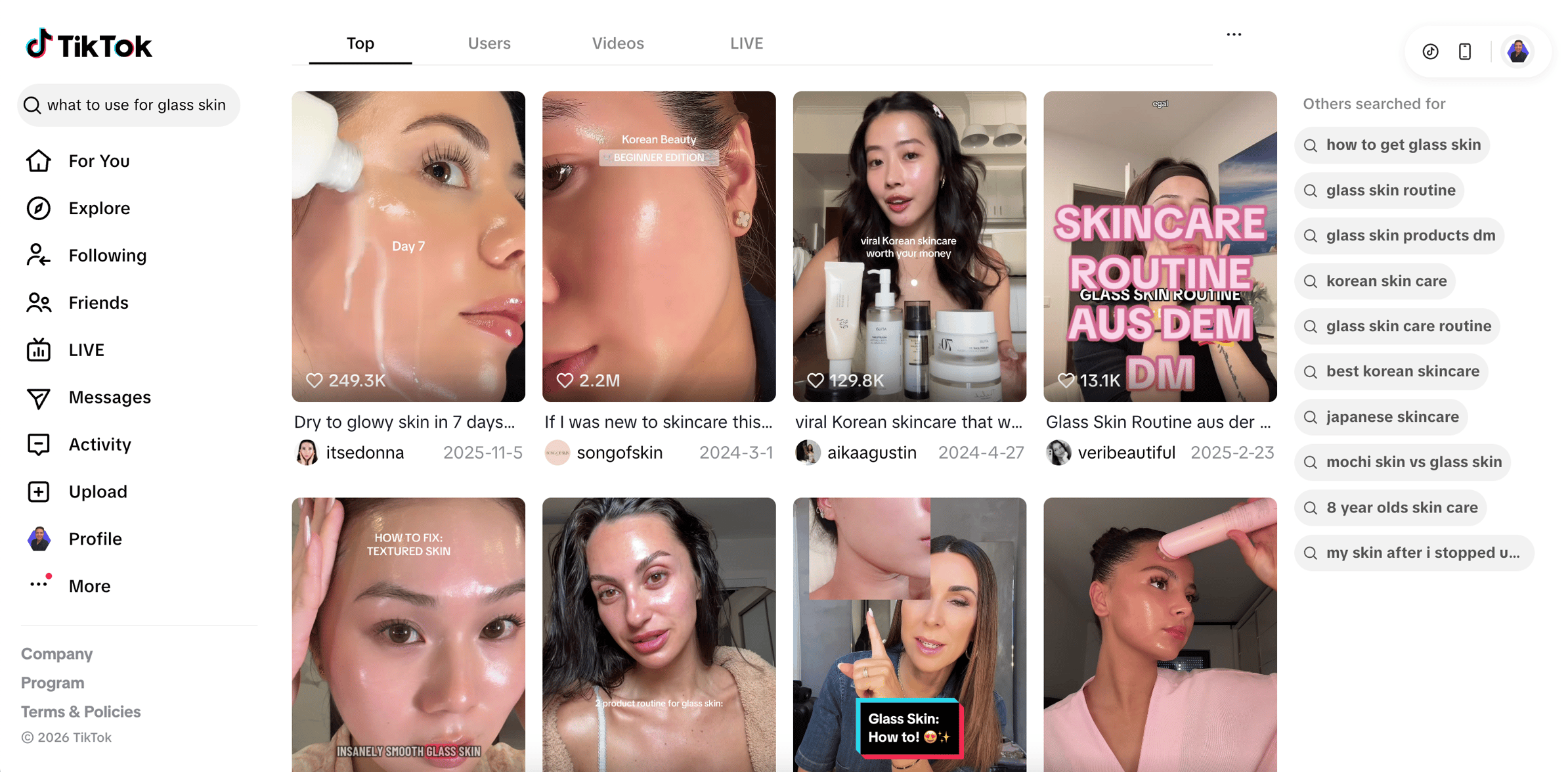

Screenshot of TikTok Searches

The key point here is that social search is not just "someone types in a keyword". Discovery also happens before users consciously formulate what they are looking for. The algorithm plays out content that matches interests, context and behavior. Creator expertise becomes a filter - and brands are either included or omitted from these answers.


Creator content is the new SEO

When search behavior changes, so does influence.

In traditional SEO, pages that clearly reflect keywords, structure and relevance signals win. On TikTok and the like, content that answers a question tangibly - quickly, clearly and repeatedly- wins.

At IROIN®, we call thisSearch-Based Influence: Creators generate visibility because they align content with search intentions - not just trend dynamics. You can see this in all categories:

  • A skincare creator that regularly explains "vitamin C vs. niacinamide".

  • A fitness creator who thinks of "Home Workout for Beginners" as a series.

  • A food creator who plays "High-Protein Meal Prep" not once, but consistently.

This seems banal but it is a strategic shift: brands no longer only win when they "buy reach", but when they appear in the questions that users ask anyway.


TikTok makes search intent measurable

TikTok has created its own tools for this purpose. With "Search Insights for Creators"(Creator Search Insights), the platform shows what people are searching for, where content gaps exist and how posts perform in searches.

This is relevant for brands because it exposes the current creator selection process: those who only select based on look and feel are not building a search-based presence. Those who find creators that already rank for relevant topics (or can credibly cover these topics) are building a kind of social SEO positioning.

This is where creator selection becomes an infrastructure issue: you are no longer just optimizing one post, but building lasting visibility in the recurring questions of your category. The decisive factor is which creators can answer these questions credibly - and whether they do this consistently instead of just appearing sporadically in a flight.

Because social search does not reward the one viral hit, but repeated relevance. Those who regularly play similar intent formats ("X vs. Y", "worth it...", "best option for...", "this is how...") send clear signals to the platform and audience: this account is responsible. This creates a content inventory that is played out again and again via search and feed as soon as users show exactly these patterns.

Creator selection thus intervenes in the entire discovery chain: from orientation (comparisons, classification, proof) to the decision (saves, clicks, purchase). You not only gain reach, but also space in the moments when users are actively looking for answers - and this is exactly where it is decided whether your brand is considered or not.


Google takes social content out of the walled garden

Until recently, social search remained largely in the apps. This separation is becoming more permeable. W&V reported in July 2025 that Instagram content from business accounts will be indexed by Google - a clear step out of the closed platform ecosystem.

Grafik eines ummauerten Gartens ähnlich eines Labyrinths.For influencer marketing teams, this is more than an SEO side note - it's a distribution upgrade for creator content. When platforms like Instagram become indexable for Google, a post no longer ends up in the Reels feed: It can suddenly also appear where users are actively searching. Social content thus leaves the "walled garden" and takes on a second life outside the app.
This fundamentally changes the effect of creator collaborations: creator content becomes part of a brand's search footprint - whether planned or not. Evergreen formats in particular win because they are not tied to a trend: Explanations, comparisons, tests and clear "here's how it works" content remain relevant, are saved more frequently, found again more often and have a longer half-life than campaign assets.

In short: social content no longer only works on one stage, but on several discovery surfaces at the same time. And this is precisely what increases the pressure to not treat creator content like short-lived campaign goods, but to plan it as a findable format - with topics that come back and creators who are credible.


Why many influencer strategies fail in social search

Many influencer programs are still built according to a logic that works for awareness but falls short for searchability: reach, aesthetics, "fits the brand". However, social search evaluates other signals. Those who provide recognizable answers in a niche become relevant - with topical authority, repeated intent topics and formats that specifically solve questions instead of just generating attention.

This is where strategies often fail in three patterns. First: Trend creator without category answers. If you only react to "what's trending", you generate peaks - but hardly any long-term findability because the content is not anchored in recurring questions ("best X for Y", "X vs. Y", "is it worth...", "this is how you use..."). Secondly: wrong intent stage. A creator can work perfectly and deliver many views - but if there are hardly any saves, little need for comparison and almost no "where to buy?" signals, the search-based relevance is missing. Thirdly: unclear framing. If the core question is not immediately recognizable (no clear topic, no classification, no utility value), the algorithm is less able to categorize - and users click away more quickly.

The result is predictable: Campaigns look like some activity, but the brand doesn't systematically become more visible where Discovery starts today - in the search and response moments.


The shortcut: find creators that already rank

When ranking depends on topic consistency, niche authority and intent formats, manual scrolling is not a valid method.

You usually find the loudest accounts - not the ones that quietly but consistently serve exactly the questions that are really searched for in your category.

Many teams still treat creator selection like a casting question: who has reach, who fits visually, who sounds like a brand. This is not enough for social search, because visibility today is not only created in the moment, but in recurring search queries. Users type "X vs. Y", "best option for...", "worthwhile...", "this is how..." - and platforms give preference to accounts that use these patterns regularly and comprehensibly.

If you only post selectively or only use trending formats, you will generate attention, but hardly any long-term findability

.IROIN® by Stellar Tech is the game changer here, because you no longer search for creators "by feeling", but according to comprehensible signals that actually drive social search relevance. Instead of clicking through feeds, you start with the question: Which topics and formats are really being searched for in my category - and which creators are already consistently providing answers?

This is exactly what separates "beautiful campaigns" from content that is still being found months later.

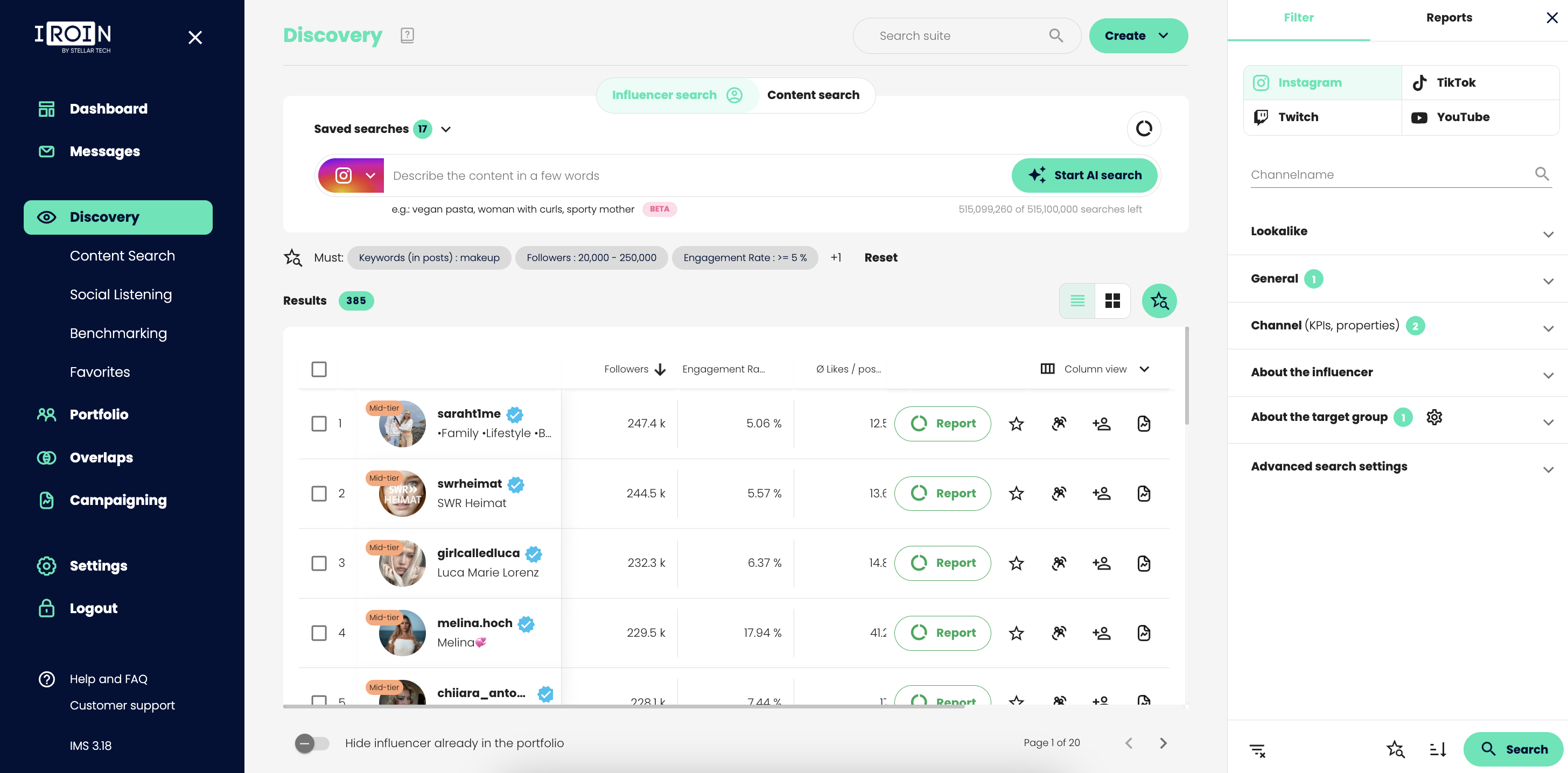
Screenshot der Discovery von IROIN®

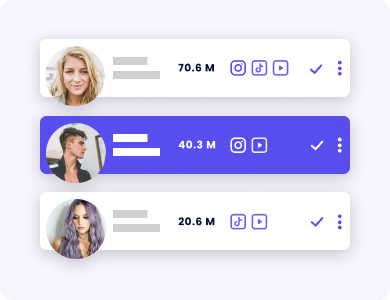
This makes it clearer and simpler: with Discovery, you can find creators along your topics, keywords and content patterns that work in social search - not along vanity metrics. With Overlaps & Discovery Reports, you can recognize whether you as a brand are really covering the relevant creator clusters or whether you are repeatedly playing the same communities and thus leaving search queries unanswered.

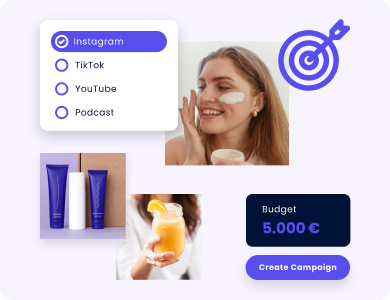
And with campaigning, you can manage these creators in a structured way across multiple pieces of content so that individual posts become a recognizable thematic line that platforms can classify and users can find again.

The difference is very tangible in the end: You're not "buying reach for a flight", you're building a creator strategy that shows up at moments when people are actively looking for answers.

And this is exactly where it is decided today whether a brand is considered - or not

.

Why this is particularly important in Europe

Europe is not "a market" for social search, but a system of languages, platform habits and cross-border trends. TikTok itself combines the EEA and the UK in its 200 million monthly users - so cross-border discovery is practically built in.

What is often underestimated here is that the same category can be "discovered" differently in different markets. A pragmatic example, adapted to Germany, the UK and France:

In Germany, discovery in many categories is strongly benefit and evidence-oriented. Users react above average to tests, clear comparisons, value for money, "What's really good?".

Creators that provide structured explanations and compare variants have advantages in social search - because they serve recurring decision-making questions.

In the UK, search patterns are often more strongly characterized by convenience and deals: "best under...", "worth it?", "dupes", "where to buy".

Comparison formats also work here - but often with a stronger shortcut expectation: quick classification, clear recommendation, clear trade-offs.

In France, a stronger ritual and routine logic is often seen in areas such as beauty and food: creators build authority through routines, sensory language and step sequences.

This changes the search intention: less "test report", more "routine that works " - and therefore also the content design.

The consequence for brands: If you take social search seriously, you plan not just creators per country, but questions per country. And you make sure that creator content matches the local search logic in terms of language, context and format

.

Conclusion: If you don't rank on TikTok, you really are invisible

When discovery shifts from Google to social search, TikTok ranking is no longer a nice extra task, but a prerequisite for appearing in your category at all. The problem is not "too little reach", but a different one: you are missing in the moments when users are actively comparing and preparing purchase decisions.

This is precisely where invisibility arises today - not through a lack of content, but through a lack of answers.

The strategic consequence: Creator programs must switch from awareness logic to intent logic. Recurring questions, recognizable topic lines and formats with clear utility value are crucial - because this is exactly what is stored, found again and better assigned by platforms.

IROIN® by Stellar Tech helps with this in a very concrete way because it makes social search visibility plannable: you don't select creators based on gut feeling, but along topic and search patterns, recognize gaps in your topic and community coverage and control activations so that individual posts become a consistent topic presence. If the title is right - "If your brand doesn't rank on TikTok, you're invisible" - then the solution is just as clear: select creators who provide answers and use them to build a lasting presence.