


















 Nicole

Fanblast & Knossi: When creator projects become a brand safety trap
It didn't start with a shitstorm.
It started with voices that were barely heard for a long time.
Former creators and business partners of the creator and event project Fanblast publicly raised serious accusations: broken promises, lack of transparency, problematic internal structures and, particularly sensitive, questions about the handling of creator data. One of the accusations that emerged in the public discussion was that creator contact details, including telephone numbers, were shared without sufficient clarity about their purpose and further use, as reported by ComicSchau.
Regardless of how individual allegations are to be assessed in legal or factual terms, this point marks a clear boundary. As soon as trust, data flows and power relationships in creator projects are called into question, an internal conflict becomes a brand safety issue, even for brands that were never directly involved.
Knossi, one of the best-known influencers in the German-speaking world and co-founder of Fanblast, is also at the center of the debate.
Why the scandal first came to light on YouTube
What is striking about the Fanblast case is not only what became public, but also where the public reappraisal began. The scandal did not start in the traditional media, not through brands or agencies, but within the creator scene itself.


YouTubers like Klengan and RobBubble picked up on the accusations early on, bundled scattered statements, categorized public statements and made internal dynamics comprehensible for the first time. In his video, Klengan primarily analyzed power relations, communication patterns and content-related contradictions within the project and its public presentation. RobBubble took a more journalistic approach to the topic, gathering perspectives from the community and giving those affected space to describe their experiences.
It was only after these videos achieved a wider reach and the discussion within the community gained momentum that larger online media picked up on the case. As a result, Fanblast published a videostatementfollowed later by an attempt to repositioning under the narrative "Fan First". Also Knossi himself made a public statement about his role and responsibility in the project.
This process is crucial for marketers. It shows that brand-relevant risks today often become visible where traditional brand safety mechanisms do not look: in community discourse, on YouTube, in long-term creator observations. Not as a sudden scandal, but as a growing narrative that develops over weeks or months, long before it appears in official press channels.
Why this is not a classic influencer drama
The Fanblast case is fundamentally different from well-known influencer crises.
There was no problematic sponsored post. No failed campaign. No incorrect advertising labeling. From a classic brand safety perspective, there was initially nothing that could be clearly identified as problematic.
Instead, the risk developed within a creator-led company: over time, over relationships, over disappointed expectations, over unclear responsibilities and over questions of data sovereignty. These dynamics were discussed within the community long before they escalated publicly.
This is precisely where many existing brand safety logics reach their limits. They evaluate content, but not developments. They react to visible errors, not to creeping structural problems.
The Fanblast case shows that reputational risks can arise without a problematic post ever being published.
Creator risks arise quietly
Creators are no longer just reach channels. They are entrepreneurs, employers, investors and public figures at the same time. Their projects generate dependencies, data flows and expectations, both internally and externally.
Communities often observe these developments very closely. Brands, on the other hand, often only notice them when conflicts have already become public.
For marketers, this means
- Brand safety is not a control mechanism for campaigns.
- It is a question of context, history and development.
Where IROIN® comes into play
This is where it becomes clear what IROIN® is used for today. IROIN® is designed to make contexts, histories and developments in influencer marketing visible in which risks can arise, often long before they escalate publicly.
IROIN® helps marketers to understand creator ecosystems not selectively, but over time:
- Discovery is not just about finding creators, but about categorizing topics, narratives and long-term content patterns.
- Campaigning & reporting make collaborations historically traceable: Who worked when, in what context, with which brands?
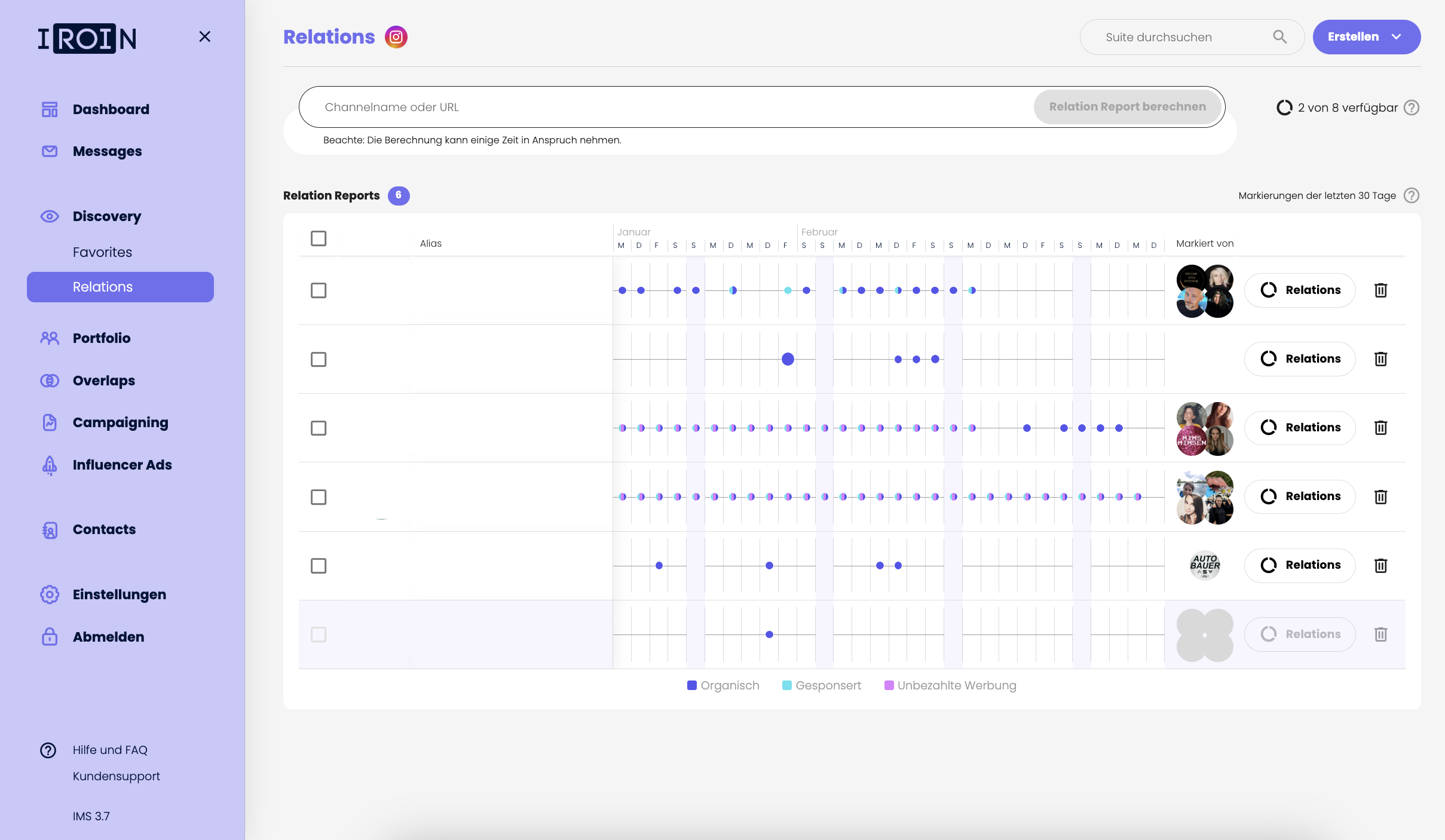
- Relationship management creates transparency about the duration, intensity and development of creator relationships, a prerequisite for realistically assessing opportunities and risks.
The Fanblast case illustrates why this is crucial. The allegations arose independently of individual campaigns, but in retrospect had an impact on every brand associated with the people involved.
What the Fanblast case changes for professional influencer marketing
The Fanblast case is neither an outlier nor a classic influencer drama. It reveals where many risks in influencer marketing actually arise: outside of campaigns, beyond individual posts and often long before brands can even react.
The decisive signals were not in problematic content, but in structures, relationships and expectations within a creator project. This is precisely why a campaign-centric view falls short. Those who manage influencer marketing exclusively via activations, KPIs and short-term measures often only see developments when they escalate publicly.
For marketers, this means a change of perspective. Brand safety is not an emergency mode that you switch on when there is a fire. It is the result of context, history and continuous observation. Trust is not created by individual campaigns, but by understanding how creators, their projects and their ecosystems develop over time.
Professional influencer marketing begins where connections are made visible: between creators, their participations, their communities and the brands that work with them. Today, it is precisely this understanding that determines whether partnerships grow sustainably or become unnoticed reputational risks.