

















 Nicole

From TikTok star to 900 million dollar entrepreneur:
The rise of Khaby Lame is one of the most famous creator success stories of our time. From unemployed factory worker to the most followed TikTok creator in the world, this story has long been part of pop culture. But what is currently happening around Khaby goes far beyond a classic influencer story.
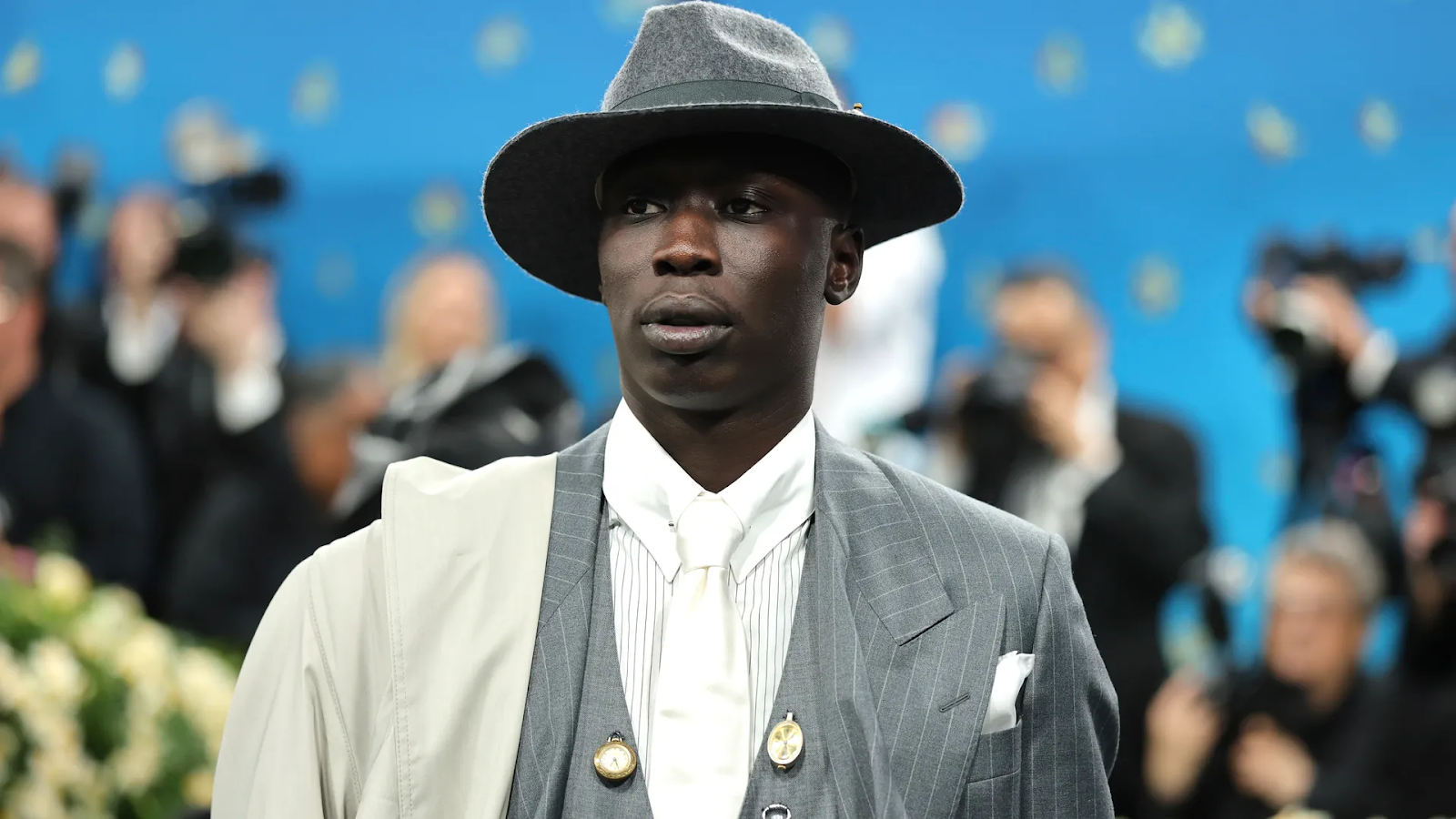
Khaby Lame is not only selling shares in his company for around 900 million dollars, he is also starting to clone himself using artificial intelligence as a scalable, digital version of his own creator persona. What sounds like science fiction is reality and has been widely discussed in recent weeks, including by Business Punk, Manager Magazin and eMarketer.
For marketers, this is not a curious side issue. It is a signal.
Why this deal is relevant for brands
The exact valuation is less important than what it stands for. Khaby Lame is no longer just a creator that participates in campaigns. It functions as a media brand, licensable identity and technology-enabled business model whose value goes beyond short-term reach.
As reported byManager Magazin, the deal for Khaby Lame is not primarily based on follower numbers, but on the monetization of its global brand awareness and diversified commercial investments.
For marketers, this development is particularly relevant for one reason: Scalability and efficiency. AI-supported models make it possible to produce, adapt and localize content without the creator having to be physically involved in every step. This principle is already established on the brand side.
 Consumer goods company Unilever has publicly confirmed that it is integrating generative AI into marketing and production processes. With the help of Omniverse technology from NVIDIA creates Unilever digital twins of its products, for brands such as Dove, Vaseline and TRESemmé. According to Unilever, this makes it possible to reduce production costs, create content
more quickly and scale campaigns efficiently across markets.
What Unilever is implementing at brand level can now also be seen on the creator side. In the case of Khaby Lame, AI is not only used to optimize workflows, but also to expand the identity itself. Visual language, gestures and personas become reproducible assets that can be used consistently across formats, markets and partnerships.
For brands, this fundamentally changes the nature of creator partnerships. Collaborations are no longer just about individuals, but entire ecosystems consisting of identity, technology, licensing models and long-term business strategies. This creates efficiency and reach, but at the same time increases the requirements for governance, transparency and brand safety. The central question is no longer how much reach a creator delivers today, but how controllable and connectable the ecosystem is with which a brand connects.
When creators become replicable assets
The role of artificial intelligence is particularly relevant in this case. How Business Punk reports, Khaby Lame is building a system in which his visual language, gestures and persona can be reproduced using AI. Content and brand integrations can thus be scaled without him having to be personally involved in every implementation.
This marks a structural change in influencer marketing. AI is no longer just a tool for content production, but is becoming part of a creator's commercial infrastructure - a means of expanding presence, output and consistency across markets.
For brands, this fundamentally changes how creator partnerships need to be thought about. As soon as AI-generated versions of a creator are used, authorship becomes less clear. Questions about tonality, statements and boundaries can no longer be clarified at the start of a campaign alone, as content can scale faster than the personal control of the creator. At the same time, transparency is becoming a key trust factor: communities increasingly expect clarity about whether content is human-created, AI-assisted or fully generated. Unclear labeling can undermine trust - even when style and recognizability are maintained.
Most crucially, however, brand fit is no longer a static state. AI-driven creator output is constantly evolving. Narratives, themes and public perception therefore need to be continuously monitored rather than released once. The Khaby Lame case exemplifies how creator collaborations are evolving into long-term, technology-enabled relationships that require new governance and evaluation models.
Why this is not an isolated case
Khaby Lame is not a special case. He is an early and particularly visible representative of a fundamental change in the creator economy. What we are seeing here is not simply rising fees or spectacular individual deals, but a new way of organizing and monetizing influence.
How Watson and 20 minutes report, deals of this size represent a change in the way creators are evaluated, especially when AI becomes part of the business model. Influence is no longer primarily defined by reach or engagement, but by scalability, licensability and long-term brand architecture.
For brands, this means that collaborations increasingly represent entry into entire ecosystems rather than just working with individuals. Reach becomes infrastructure, identity becomes modular and partnerships extend beyond campaign durations into networks of technology, IP and narratives. The key question for marketers is therefore no longer how many views a creator achieves today, but which system a brand enters and how this system could develop tomorrow.
Influencer marketing needs context
This is where traditional influencer workflows reach their limits. Individual campaigns, isolated KPIs or short-term activations are no longer sufficient to assess risks, opportunities and relevance.
What is needed is context over time: how a creator develops, which projects are created in parallel, how tonality, audience and positioning change and what role AI plays in this.
This is precisely where it becomes clear what IROIN®is used for today, not as a tool for reach, but as a system for relationships, histories and contexts.
Where IROIN® comes into play
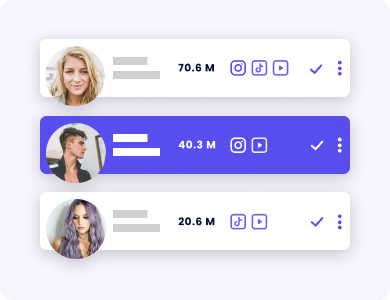
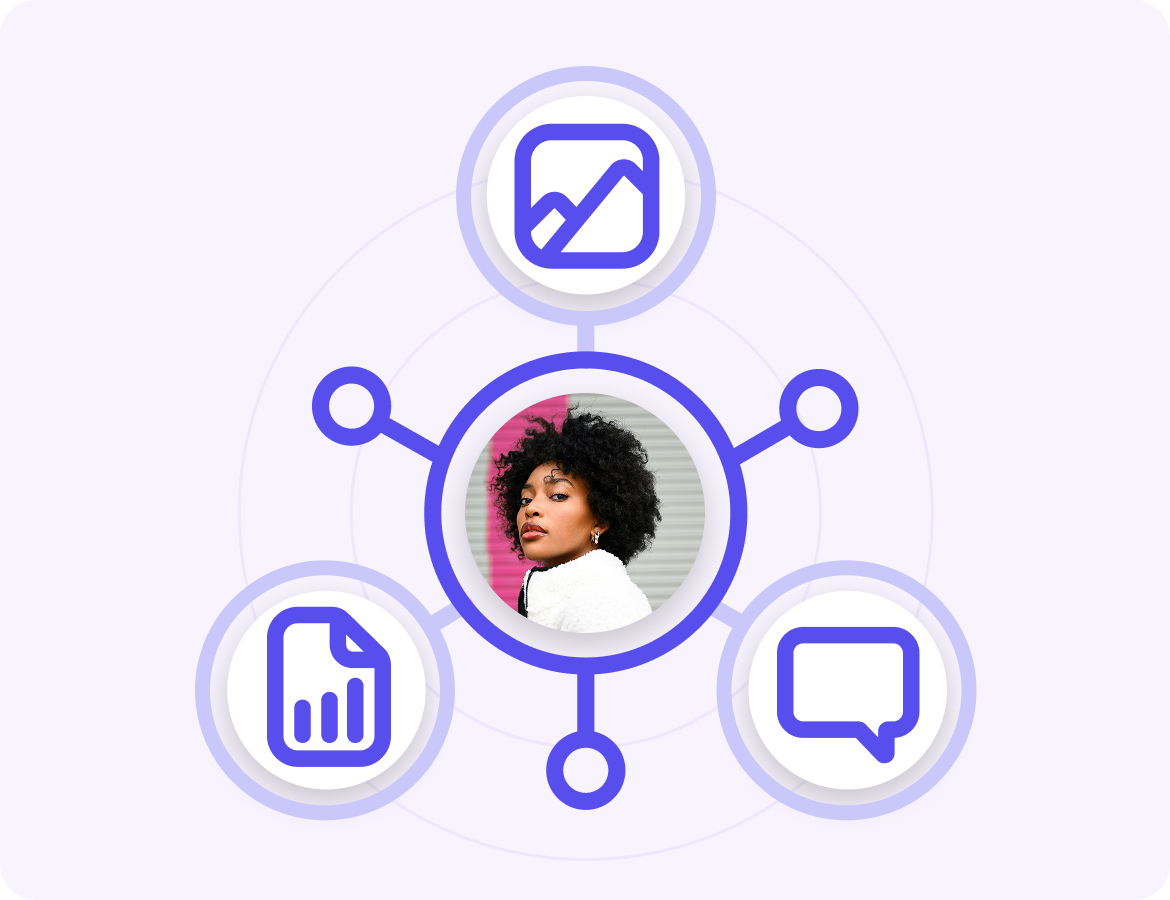
IROIN® enables marketers to think about influencer marketing relationally rather than selectively. Creators are not viewed as individual profiles, but as evolving players within a larger ecosystem.
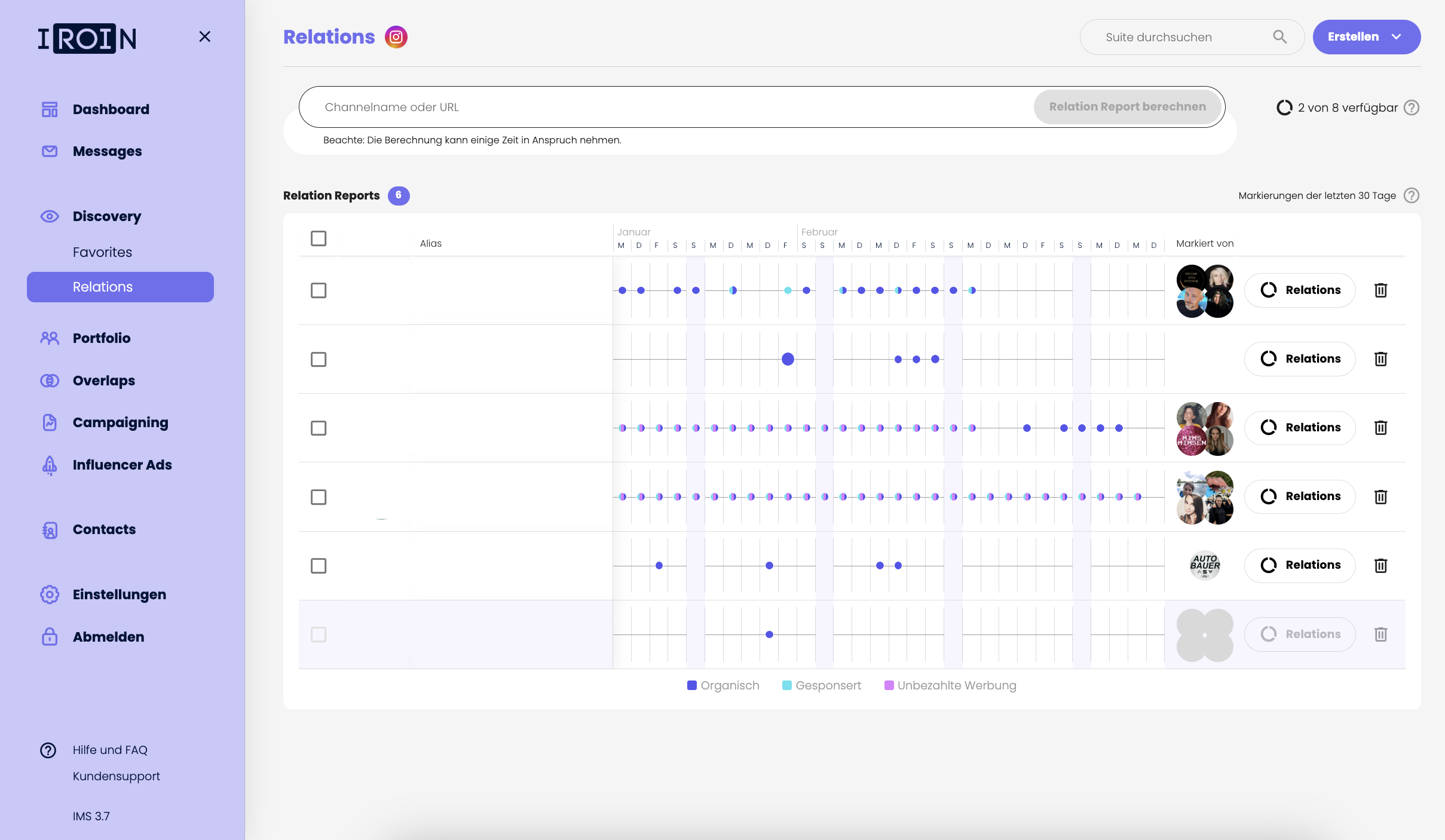
In this context, discovery does not just mean "finding", but classifying: Which topics characterize the content? Which narratives are repeated? How stable is the relationship with the community?
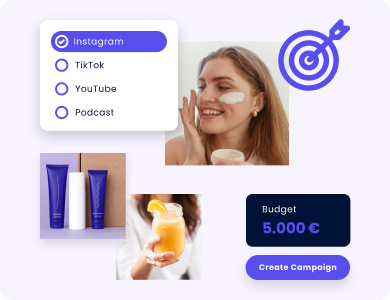
Campaigning becomes the structured management of complexity, not the mere processing of deliverables.
Relationship management creates transparency over time: Who works with whom and for how long? What lessons are learned? What risks may be creeping up?
The case of Khaby Lame shows why this is crucial. Because his AI strategy, his corporate deals and his public perception exist independently of individual campaigns, but have a direct impact on every brand associated with him.
Brand safety in an AI-driven creator world
Another aspect: brand safety.
Not in the sense of "preventing scandals", but as a question of governance and understanding.
When creators start to duplicate themselves using AI, this raises not only a creative question, but also a strategic one: who controls the narratives? Who bears responsibility? And how transparent are these processes for brands?
IROIN® addresses these questions not with promises, but with structure. Those who document developments, track relationships and read data in context do not act reactively, but are prepared.
Why 2026 will be decisive
 The Khaby Lame deal is not a PR stunt, but a reality check for an industry in transition. Many of the dynamics that this case makes visible pick up on central developments that arealso explored in depthin the IROIN® Trend Guide 2026: the growing influence of AI on creative processes, the need to rethink brand safety in an AI-driven world, the change in the search and reception behavior of Gen Z and the realization that influencer marketing no longer works in isolated silos. Instead, an ecosystem is emerging in which impact, relevance and risk can only be meaningfully evaluated if data is read in a temporal and relational context. Influencer marketing has therefore reached a stage of maturity in which reach alone is no longer a basis for decision-making. Anyone working successfully with creators today needs systems that map relationships, make developments comprehensible and keep connections visible over time. This is exactly where IROIN® comes in: not as a trend accelerator, but as an infrastructure to classify complex creator ecosystems before they change the market or the brand.
👉 Read the IROIN® Trend Guide 2026