

















 Benedikt
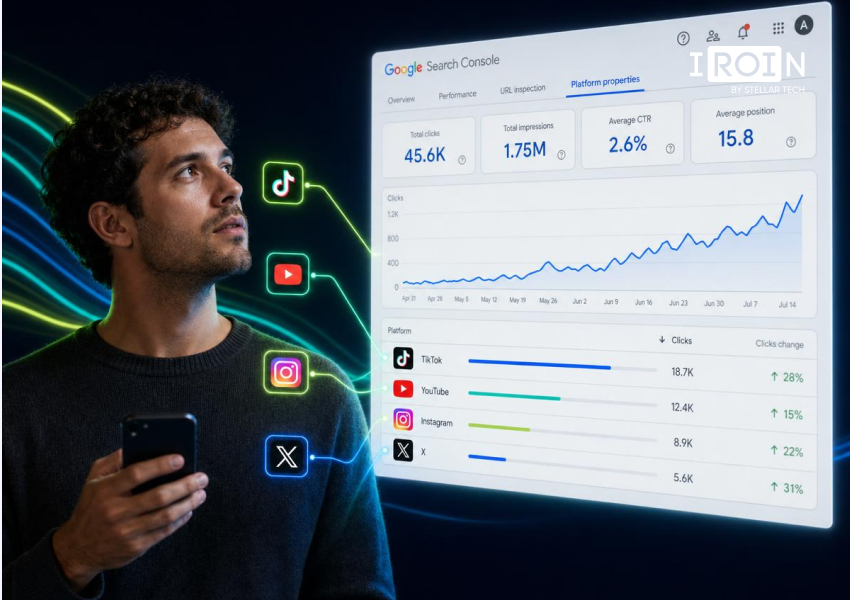
Google admits that your creators are part of search
 On July 7, 2026, Google rolled out a feature in Search Console called “Platform Properties.” Specifically, as Search Engine Land reports, this means you can now see how your content on Instagram, TikTok, X, and YouTube performs in Google Search. You verify a Platform Property, and Search Console shows you clicks, impressions, and – most importantly – the search terms that lead people to your social posts.
Google itself states that you can track which search queries lead people to your content on Instagram, TikTok, X, and YouTube and that you can see how your target audience interacts with these posts. The rollout is happening gradually, so the feature may not be visible in your account yet.
Look beyond the tool itself, because what’s really interesting is the signal behind it. Google officially treats social and creator content as search content that ranks – in the same category as your website. For years, the honest answer to the question “How is our influencer content performing in search?” was a shrug. Now there’s a report for it. This changes the very purpose of influencer marketing.
Discovery has long since moved beyond the search bar
This didn't come out of nowhere. For years, the way people find things has been moving away from the traditional search box, and creators are the reason why.
Take a look at how younger audiences behave. Statista found that 46% of U.S. Gen Zers prefer to search for information on social media rather than through search engines and that 41% used TikTok as a search engine in 2024. Another consumer study, highlighted by Forbes, paints an even clearer picture: among 18- to 24-year-olds, 67% search via Instagram and 62% via TikTok, pushing Google down to third place. Even Google’s own internal data, made public by Nieman Lab, shows that nearly 40% of young users turn to TikTok or Instagram instead of Google when looking for a restaurant.
People who search on TikTok or Instagram don’t click through ten blue links. They watch a creator. That’s exactly where the shift lies: creators have become the search results themselves. We’ve already covered one aspect of this, namely, why your brand is invisible if it doesn’t rank on TikTok. Google’s new report shows the same trend from the opposite perspective.
Now, there’s the AI layer to consider. An analysis by Search Engine Land of 6.77 million AI-mediated sessions shows that AI-driven sessions increased nearly tenfold during the period studied. A single assistant accounts for the vast majority of this referral traffic. Discovery is now spread across traditional search, social search, and AI-generated answers, and creators provide the content for all three.
Influencer marketing is now an SEO channel
When you put these pieces together, influencer marketing no longer looks like an awareness-building effort at the top of the funnel. It looks like one of your most important discovery and SEO channels.
The budgets have long since shown this. Statista estimates that the global influencer marketing market will reach approximately $33 billion by 2025—more than three times its 2020 size. Instagram’s share alone has surpassed $22 billion for the first time. This is no longer just awareness spending. These are brands paying for content that appears when their customers search on Google, search on TikTok, and, increasingly, search within an AI-powered response.
The catch: A channel is only as valuable as your ability to measure it and staff it with the right people. And this is precisely where Google’s new report falls short.
The gap that Google leaves wide open
 The Platform Properties in Search Console are really useful. Just be aware of what they show: only the portion of your creator content that appears in Google Search. You won’t find out there how a Reel performed in Instagram search, how a video ranked in the TikTok feed, or how the target audience actually reacted on the platform where the content is hosted. Each platform holds its own piece of the puzzle, and no native tool puts them all together.
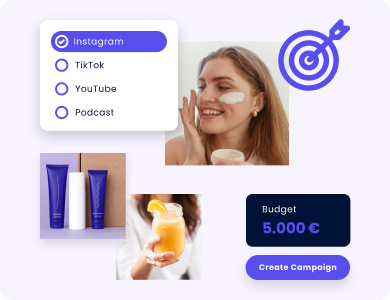
IROIN® fills exactly this gap. With our campaign module, you can automatically track creator content across all platforms, monitor performance in real time, and make adjustments while the campaign is still running rather than waiting until afterward. Thanks to our reporting features, you can turn this activity into tangible proof: Reach, engagement, EMV, ROI, and sales performance all in one place, with links and promo codes tied to real results and sentiment analysis that explains the “why” behind the numbers. Google, on the other hand, only gives you a peek through the keyhole.
Find the creators who actually rank
When influencer content becomes a search result, choosing creators has more to do with keyword and content strategy than with casting. You want creators whose content actually gets found and is trusted—not just those with the largest number of followers.
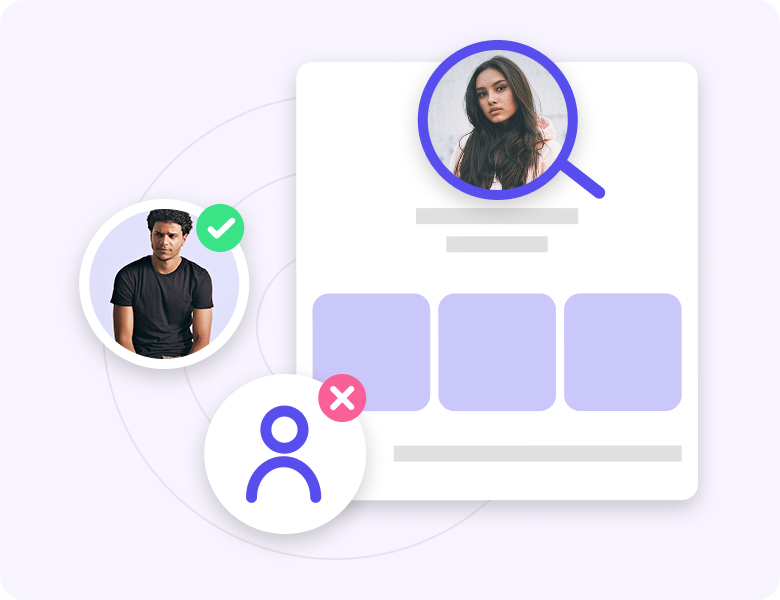
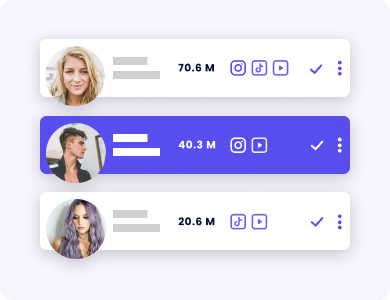
It’s a matter of research and vetting. With IROIN® Discovery, you can search a database of over 440 million creators on Instagram, TikTok, YouTube, and Twitch using more than 45 filters and use social listening to identify who’s already ranking in your category and who people are talking about. With our audience analysis tool, you can verify the authenticity of the audience, check for fake follower rates, and review past collaborations before making a decision. This ensures your budget for this marketing channel goes to creators who truly make a difference. Thanks to our AI summary, you can evaluate a profile in seconds and then manually dig deeper only into those who pass the initial filter.
This is where forward-thinking teams pull ahead. Measuring influencer marketing in a single tool is good. Having it automatically feed into the same dashboard as every other channel is better.
Thanks to IROIN®’s API, your influencer performance and social tracking data don’t have to remain siloed. You can feed it directly into your own business intelligence system, alongside your web analytics, search data, and revenue figures. Instead of having influencer results in one report and everything else in a second one, your team sees the entire customer journey in a single view: the creator’s post, the search for it, the visit, and the purchase. This way, influencer marketing stops being “that social media thing over there” and becomes a measurable, board-ready channel just like any other.
The idea behind it is simple. The channel now represents serious budgets and significant search visibility. So it belongs in the same metrics you use to manage your business anyway.
Conclusion
Google’s new report in Search Console is a small feature with big implications. It’s the clearest sign yet that creator content is increasingly becoming “search content” and that influencer marketing has quietly become a key discovery channel. Four things follow from this:
- Discovery today takes place across multiple platforms. Your customers search on Google, TikTok, and Instagram, as well as within AI-generated responses, and creators are providing the content for all of these channels.
- Influencer content is an SEO asset, not just a way to build awareness. A $33 billion market actually means this: Brands are paying for what appears when people search.
- Native tools only ever show fragments. Google sees its slice, each platform sees its own, and only cross-platform tracking reveals the complete performance picture.
- The real advantage lies in the integration. Those who bring influencer and social data into their own BI stack – alongside search and sales data – turn a scattered channel into a measurable one.
The teams that will succeed in the coming years will treat creators the same way they’ve long treated search: as a discovery channel that needs to be measured properly. IROIN® brings creator research, vetting, cross-platform tracking, and reporting into a single workflow, and the API integrates all of this into the systems you’re already using. Google just told you that your creators are part of search. The question is whether you’re seeing the whole picture or just the part that fits into a report.